- Licensed and insured facade contractor
- Manhattan, Brooklyn, Queens and the Bronx
- Same-day response on unsafe facades
- Call (917) 355-8556
Home/Facade Services NYC/Unsafe Facade Repair NYC
Unsafe Facade Repair NYC With Same-Day Response
When a QEWI or the DOB flags your facade as Unsafe, the sidewalk has to be protected right away and the repair clock starts. Local Law 11 NYC responds the same day to secure the public, remove or stabilize loose material and plan the permanent repair, so your building gets back to Safe without months of penalties. We handle Unsafe facades on apartment buildings, co-ops, condos, office towers and mixed-use properties across Manhattan, Brooklyn, Queens and the Bronx.
- Same-day response on unsafe facades
- Licensed and insured contractor
- Sheds, netting and make-safe crews

What an Unsafe Facade Means in NYC
An Unsafe facade in NYC is an exterior wall or attachment that a Qualified Exterior Wall Inspector finds hazardous to people or property under the Facade Inspection and Safety Program. The owner must install public protection such as a sidewalk shed immediately, the QEWI reports the condition to the DOB, and the repairs must be completed within 90 days of filing the report unless the DOB grants an extension.
An Unsafe rating can come from a scheduled FISP inspection, an annual parapet observation, a neighbor’s 311 complaint or a piece of masonry that has already fallen. However it starts, the steps after it are the same, and every day without protection or a plan adds risk and cost. Unsafe facade repair in NYC is about moving fast in the right order. Protect the public first, make the wall safe second, then complete the permanent repair your QEWI can sign off.
What Happens in the First 24 Hours of an Unsafe Facade
The first day decides how safe, how long and how expensive an Unsafe facade repair in NYC becomes. This is the order we follow from the moment you call.
01
You call, we dispatch
A supervisor and crew head to the building the same day, with barricades and protection materials on the truck.
02
The danger zone is closed off
We fence or barricade the sidewalk below the hazard right away, then set up a permitted sidewalk shed, netting or construction fence as the QEWI recommends.
03
The DOB is notified
Your QEWI reports the condition by calling 311 and files a FISP3 notice of unsafe conditions in DOB NOW Safety.
04
Loose material is made safe
Under the QEWI’s direction we remove loose brick, stone or terra cotta, or hold it in place with temporary straps, pins or netting.
05
Everything is photographed and mapped
Each location goes on an elevation sketch with photos, which becomes the base for the repair scope and the amended report.
06
You get a repair plan
We price the permanent repair, list the permits it needs and set the dates for every 90-day extension in case the work runs longer.
If the condition comes from a scheduled inspection, see how we plan the full FISP inspection NYC so problems are caught before anything falls.
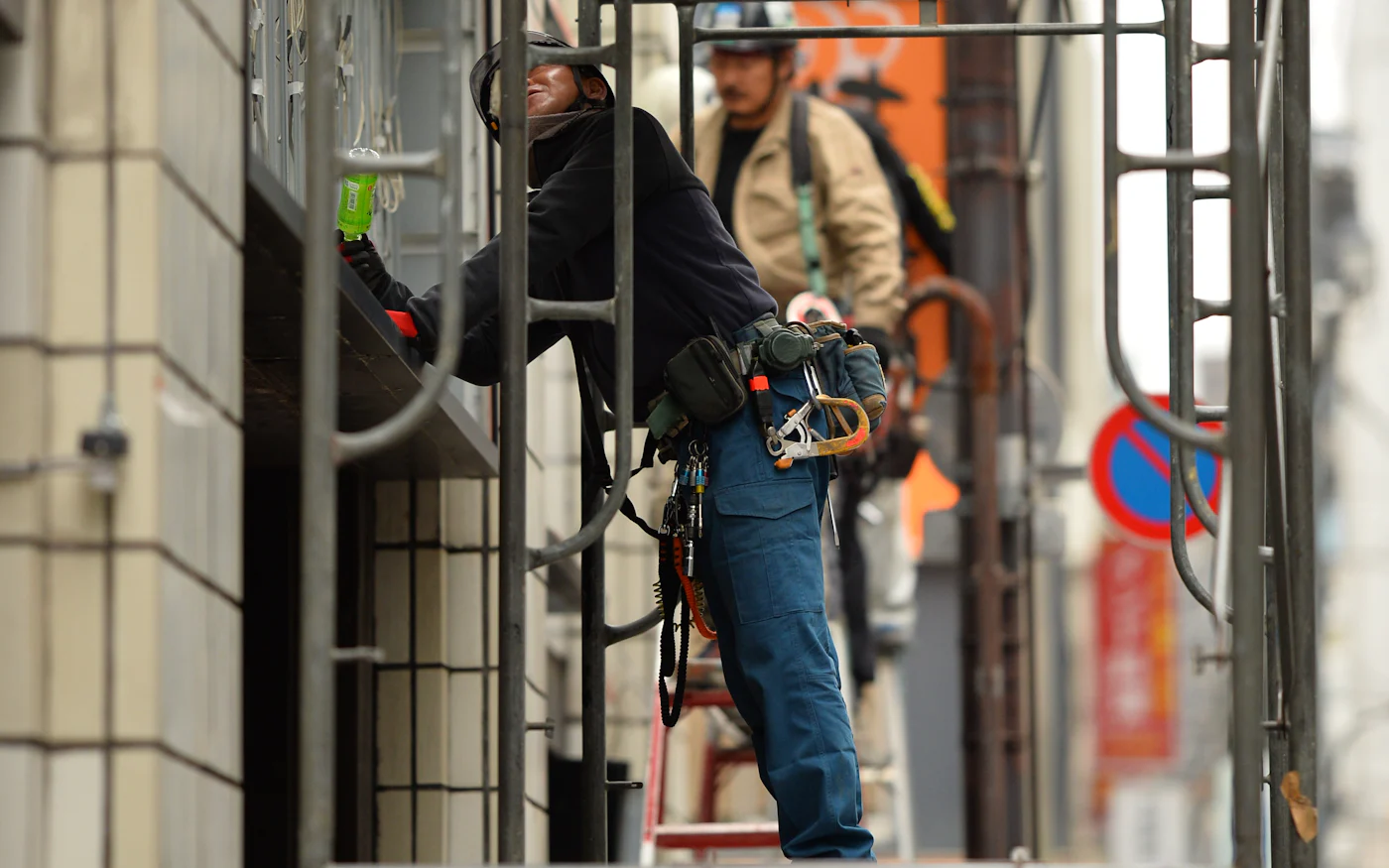
Make-safe crews work under the direction of your QEWI.
- Same-day dispatch across four boroughs
- Licensed and insured contractor
- Work performed under QEWI direction
- Residential and commercial buildings
Common Unsafe Facade Conditions and How We Fix Them
Most Unsafe ratings in NYC trace back to a few conditions, and each one has a quick make-safe step and a permanent repair. The make-safe step protects people now, and the permanent repair is what takes the building back to Safe.
| Unsafe condition | Make-safe step | Permanent repair |
|---|---|---|
| Loose or cracked terra cotta | Remove loose pieces or strap and net them | Pin, patch or replace units to match. Terra cotta repair NYC |
| Bulging or detached brick | Take down loose brick and net the area | Rebuild the section with new ties and matched brick. Masonry facade repair NYC |
| Leaning or cracked parapet | Remove loose coping and brace the wall | Rebuild or reinforce the parapet with new coping and flashing. Parapet wall repair NYC |
| Rusted lintel pushing out brick | Remove loose brick and shore the opening | Replace the lintel, flash it and rebuild the masonry above |
| Loose cornice or stone ornament | Remove or tie back loose parts | Re-anchor or rebuild the cornice with stainless anchors |
| Loose railing, balcony or fire escape part | Close access and secure the part | Repair or replace steel, then secure the railing against movement |
| Loose window unit bracket or sleeve | Remove the unit or secure the bracket | Install a compliant bracket or sleeve |
The DOB rule treats a railing that is not secured against movement as Unsafe, so railings are one of the fastest ways a building on an otherwise clean report ends up on the Unsafe list.
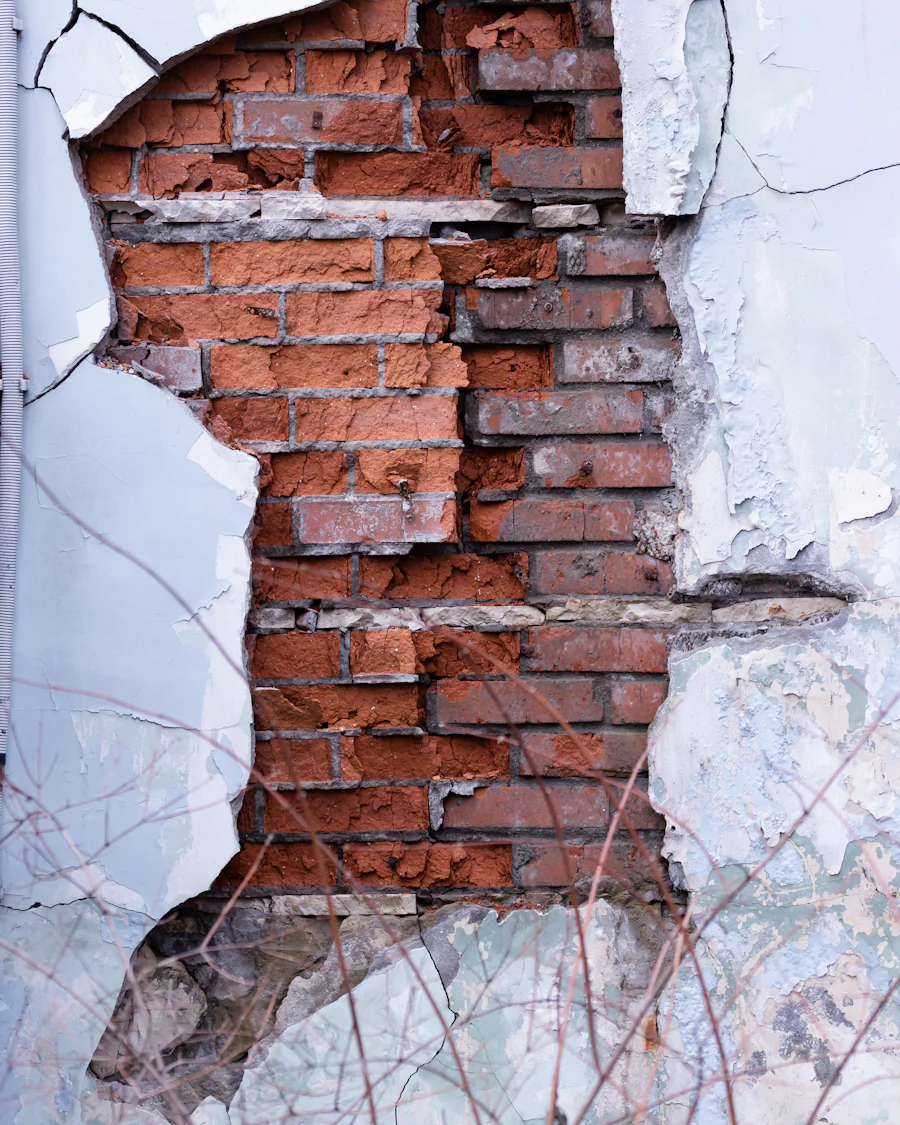
Detached brick is removed or netted before the permanent repair.
Sidewalk Shed, Netting or Fence for an Unsafe Facade
Every Unsafe facade in NYC needs public protection, but a full sidewalk shed is not always the only answer. Your QEWI recommends the type and location, and we install the option that protects people at the lowest total cost.
| Protection | When it fits | What to know |
|---|---|---|
| Sidewalk shed | Hazards above a busy sidewalk or building entrance | The most complete protection, but the most expensive the longer it stays |
| Netting or structural netting | Loose material on upper floors that can be contained at the wall | Can be faster to install and keeps the sidewalk clearer |
| Construction fence | Hazards over areas where people can be kept back from the wall | Works on wide sidewalks, plazas and private setbacks |
All three need a DOB permit, and protection must stay until the DOB approves an amended Safe or SWARMP report or a partial shed removal request.
The New Sidewalk Shed Rules You Need to Know
- Sidewalk shed permits now run 90 days at a time, and renewals need a progress report from a registered design professional.
- From the second renewal, sheds with no work in progress face penalties of $10 per linear foot per month, rising to $100 after three years and $200 after four years, up to $6,000 a month.
- Sheds must use brighter LED lighting underneath.
See how we plan and remove sidewalk shed and scaffolding in NYC to keep shed time short.

Netting can contain loose material on upper floors and keep the sidewalk clearer.
What an Uncorrected Unsafe Facade Costs NYC Owners
An Unsafe facade gets more expensive every month it stays open, because penalties stack on top of shed rental. This is what owners face when repairs fall behind.
| Penalty or charge | Amount | When it applies |
|---|---|---|
| Uncorrected Unsafe condition | $1,000 per month | From 90 days after the Unsafe report, unless an approved extension covers the time |
| Shed charge, second year | $10 per linear foot per month | Added to the monthly penalty |
| Shed charge, third year | $20 per linear foot per month | Added to the monthly penalty |
| Shed charge, fourth year | $30 per linear foot per month | Added to the monthly penalty |
| Shed charge, fifth year | $40 per linear foot per month | Added to the monthly penalty |
| Repair plans not filed | $5,000 to $20,000 | No plans filed within 5 months of the first shed permit |
| Repair not finished | $5,000 to $20,000 | Work not done within 2 years of the first shed permit |
| Extension request | $305 each | Every FISP1 or FISP2 filing |
A gap between extension requests restarts the monthly penalty for the uncovered days. The DOB also places a hazard violation on the building record for an Unsafe filing, which is dismissed once the amended report is accepted. On a building with 150 feet of shed in its third year, the shed charge alone adds $3,000 a month before the base penalty and the shed rental.
Current rules are posted on the DOB facade compliance page.
How Your Building Goes From Unsafe Back to Safe
An Unsafe rating ends only when the DOB accepts an amended report, so every repair we make is aimed at that filing. Three outcomes are possible once the work is done.
Amended to Safe
Every Unsafe item is fixed and nothing else needs work before the next cycle. Protection comes down once the DOB approves the report.
Amended to SWARMP
The Unsafe items are fixed but smaller items remain on a repair schedule. Protection can still come down, and the remaining items move to our SWARMP repair NYC plan.
Partial shed removal first
When one full elevation is finished before the rest, the QEWI can request partial shed removal so that sidewalk reopens early.
If a large repair needs more time than the original plan, the QEWI files a subsequent report to move the Unsafe completion date, because extensions cannot go past it. The full repair side, including permits and Landmarks approvals, is covered on our Local Law 11 facade repair NYC page.

The Unsafe rating ends only when the DOB accepts an amended report.
Unsafe Facade Repair Across NYC Boroughs
Our crews cover all four boroughs we serve for unsafe facade repair in NYC, and each one tends to see its own kind of emergency.
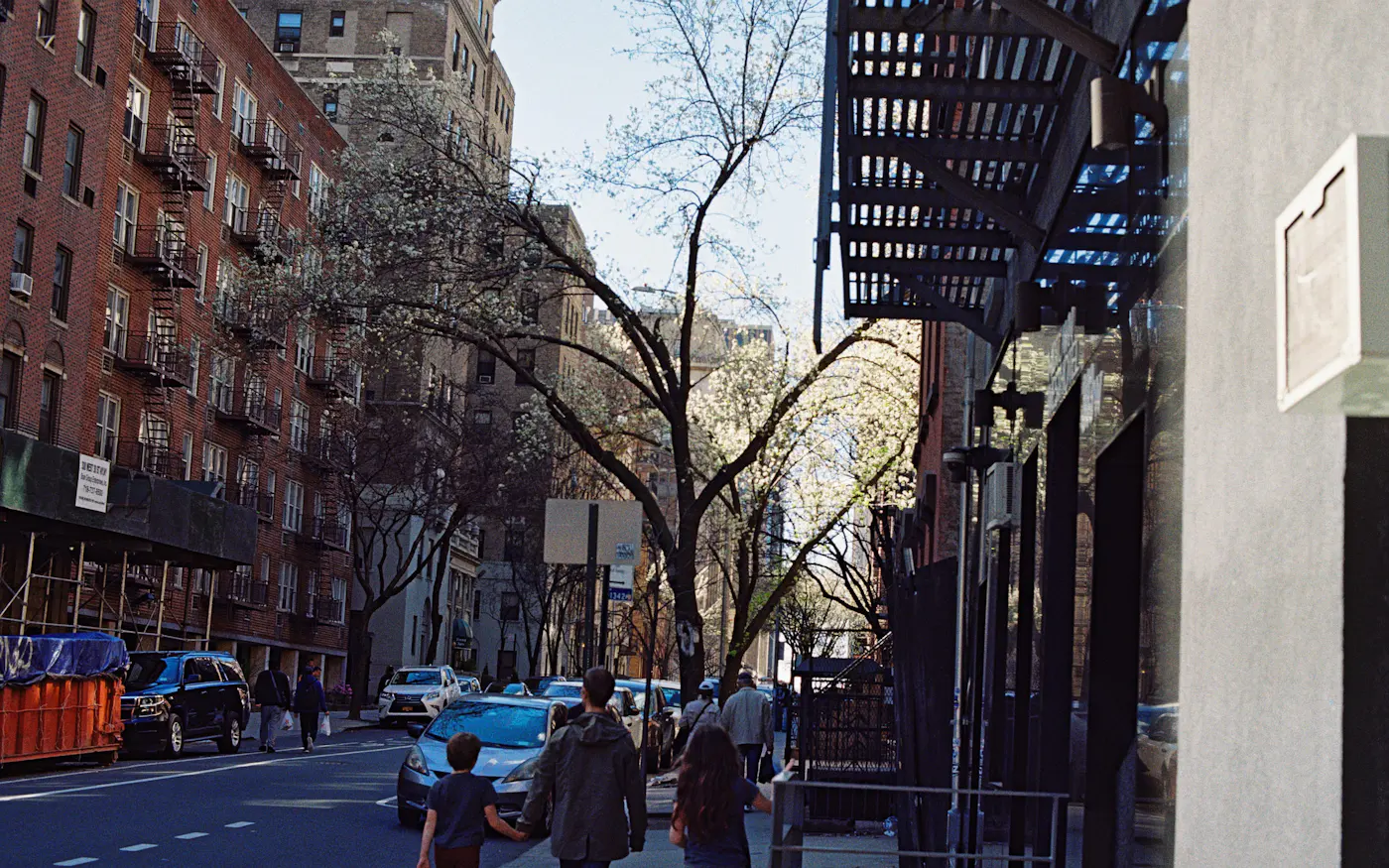
Manhattan
Cracked terra cotta and loose stone ornament on prewar buildings along busy avenues, where a shed has to go up fast without blocking lobbies and storefronts.
Brooklyn
Leaning parapets and bulging brick on older apartment buildings, often found after winter storms or freeze and thaw cycles.
Queens
Loose balcony railings and failed slab edges on postwar co-ops in Rego Park, Forest Hills and Jackson Heights, plus sealant and panel issues on Long Island City towers.
Bronx
Fire escapes, parapets and rusted lintels on large apartment houses along the Grand Concourse and in Riverdale, where many residents depend on one main entrance staying open.
Wherever the call comes from, the response is the same. We protect the sidewalk the same day and start the plan that gets the building back to Safe.
Services That Follow an Unsafe Rating
After the sidewalk is safe, these services carry the building through repairs, the amended report and the next cycle.
Cornice Repair NYC
Sheet metal, stone and terra cotta cornices
Balcony Repair NYC
Balcony slabs, railings and terrace guards
Steel Lintel Replacement NYC
Rusted lintels over windows and doors
FISP Inspection NYC
QEWI access, scaffold drops and filing support
Local Law 11 Facade Repair NYC
Repairs built straight from your FISP report
SWARMP Repairs NYC
Phased repairs before items turn Unsafe
Masonry Facade Repair NYC
Brick, stone, wall ties and rebuilds
Terra Cotta Repair NYC
Pinning, patching and matched replacement
Parapet Wall Repair NYC
Annual parapet observations and repairs
Facade Caulking and Sealant NYC
Sealant replacement at windows and joints
Sidewalk Shed and Scaffolding NYC
Sheds, pipe scaffolds and swing stages
Brick Pointing NYC
Repointing and tuckpointing brick joints
Unsafe Facade Repair NYC FAQs
Fast answers for owners and managers dealing with an Unsafe rating right now.
Is an Unsafe facade an emergency?
Yes. The DOB rule requires public protection immediately, because an Unsafe condition can drop material onto people or property. The permanent repair can follow over the next weeks, but the sidewalk has to be safe the same day.
Who reports an Unsafe facade to the DOB?
The QEWI who finds it must call 311 and file a FISP3 notice of unsafe conditions in DOB NOW Safety. Anyone who sees falling material can also call 311.
What should I do if a piece of the facade has already fallen?
Keep people away from the area, call 911 if anyone is hurt, then call 311 and call us. We close off the sidewalk, make the wall safe and work with your QEWI on the report.
Does every Unsafe facade need a sidewalk shed?
No. The QEWI recommends the protection, which can be a shed, netting or a construction fence depending on where the hazard is and how people use the space below.
How fast can protection go up?
Barricades and fencing go up the same day. A permitted sidewalk shed or netting usually follows within days, depending on the size of the area and the permit.
Can make-safe work start before the repair permit is issued?
Yes. Removing or securing loose material to protect the public can start right away under the QEWI’s direction. The permanent repair follows once the right permits are in place.
Can an Unsafe condition come from a parapet observation?
Yes. If the yearly parapet observation finds a hazard, the person who performed it must notify the DOB and the owner must install protection, even on buildings six stories or under.
Can tenants stay in the building during Unsafe repairs?
In almost all cases, yes. Protection keeps entrances and sidewalks safe, and we schedule work around residents, offices and stores.
How long does the protection have to stay up?
Until the DOB approves an amended Safe or SWARMP report, or a partial shed removal request for a finished elevation.
Can the DOB act on an Unsafe facade without a FISP report?
Yes. DOB inspectors respond to 311 complaints and can order protection and issue violations when they find a hazardous facade.
Does an Unsafe rating show up when I sell or refinance?
Unsafe filings and violations sit on the building’s public DOB record, so buyers, lenders and insurers can see them. Clearing the condition and filing the amended report removes the open status.
Who designs the permanent repair for an Unsafe facade?
Your QEWI or another registered design professional defines the repair and files any drawings the permits need. Local Law 11 NYC builds it and documents every step for the amended report.
Facade Rated Unsafe? Get a Crew There Today
Call Local Law 11 NYC as soon as your QEWI or the DOB flags a hazard. We secure the sidewalk the same day, make the wall safe and set up the repair plan that ends the penalties and brings the shed down.