- Licensed and insured facade contractor
- Manhattan, Brooklyn, Queens and the Bronx
- Same-day response on unsafe facades
- Call (917) 355-8556
Home/Facade Services NYC/FISP Inspection NYC
FISP Inspection NYC Support for Building Owners and Boards
A FISP inspection in NYC only goes smoothly when access, records and repairs are ready before the inspector arrives. Local Law 11 NYC coordinates your licensed QEWI, rigs every scaffold drop the rule requires and gets the facade ready for a report the DOB accepts. We work on apartment buildings, co-ops, condos, office towers and mixed-use properties across Manhattan, Brooklyn, Queens and the Bronx.
- Licensed and insured contractor
- Scaffold drops every 60 feet
- Same-day response on unsafe facades

What Is a FISP Inspection in NYC
A FISP inspection in NYC is the critical examination of a building’s exterior walls and appurtenances that the Facade Inspection and Safety Program requires for every building taller than six stories. A Qualified Exterior Wall Inspector, a New York State licensed architect or engineer approved by the DOB, examines the facade up close from scaffold drops and walks the full perimeter with binoculars. The QEWI then files a technical report in DOB NOW Safety that rates the building Safe, SWARMP or Unsafe.
FISP inspection support is everything that has to happen around that examination so it can take place and the report can be filed on time. At Local Law 11 NYC we schedule the inspection with your QEWI, plan and rig the drops, open cavity wall probes where the inspector calls for them, keep sidewalks protected and make the repairs the report lists. The QEWI keeps full control of the findings and signs the report. Our job is to make the access, the logistics and the repair work simple for you.
- Licensed and insured contractor
- Independent DOB-approved QEWIs sign every report
- Facts checked against current DOB rules
- Residential and commercial buildings
Which NYC Buildings Need a FISP Inspection
Every building in New York City taller than six stories needs a FISP inspection in each cycle, no matter how it is used or who owns it. The rule covers every exterior wall, not just the street front, along with balconies, railings, fire escapes, parapets, cornices and anything else attached to the outside.
Co-ops and condos
Boards get a clear schedule and resident notices before any drop moves.
Rental apartment buildings
Balconies, fire escapes and window units on every floor are checked one by one.
Office towers
Curtain walls, spandrel panels and setback terraces need careful access planning.
Prewar buildings
Terra cotta, limestone and ornate cornices call for close sounding and photos.
Mixed-use buildings
Stores at street level stay open while apartments above are inspected.
Hotels, schools and institutions
Access work is planned so the building can stay open the whole time.
New construction and buildings enlarged above six stories also join the program and file their first report in the cycle the DOB assigns. Buildings at six stories or under do not need a FISP report, but if they have a parapet facing a street or sidewalk, NYC still requires an annual parapet observation under 1 RCNY 103-15. Learn more about parapet wall repair in NYC.
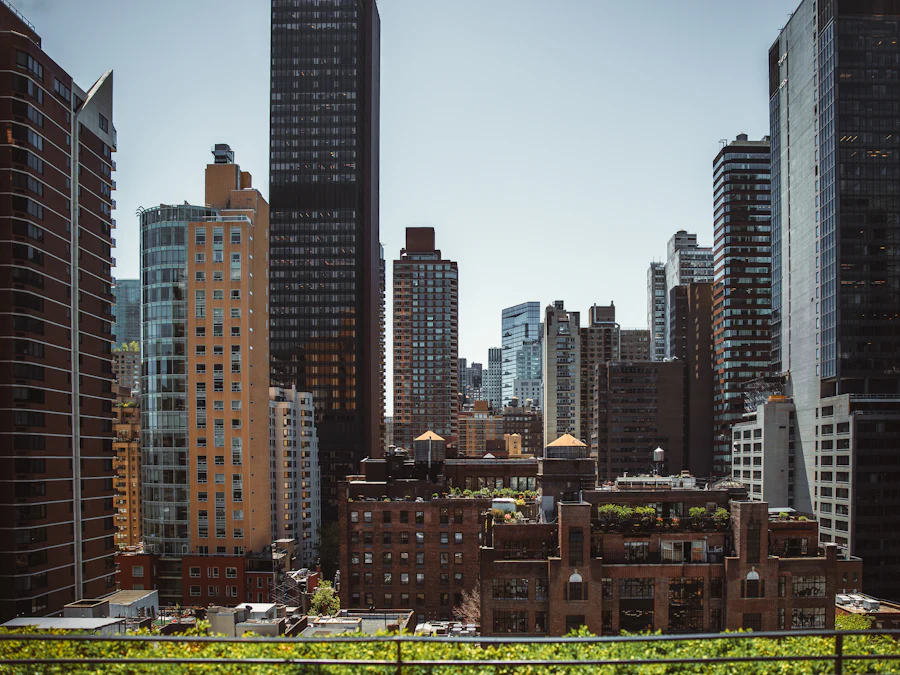
Prewar and modern towers in Manhattan both fall under FISP once they rise above six stories.
Who Does What During a FISP Inspection in NYC
Three parties share every FISP inspection, and most delays come from not knowing who owns which step. The table below shows how the work splits on a typical NYC building.
| Task | Who handles it | What it involves |
|---|---|---|
| Hire the QEWI and keep the building registered in DOB NOW Safety | Owner or board | The owner signs the inspection contract and keeps the DOB NOW account current |
| Perform the critical examination and judge every condition | QEWI | Close-up review from each drop, binocular walk-around, photos and probe results |
| Plan drop locations and rig access | Local Law 11 NYC | Drop layout with the QEWI, permitted suspended scaffolds, boom lifts or other platforms |
| Open and close cavity wall probes | Local Law 11 NYC under QEWI direction | Removing brick at probe spots so the inspector can see the ties, then rebuilding it |
| Protect the public during access work | Local Law 11 NYC | Barricades, netting or a sidewalk shed when the work calls for one |
| Prepare, sign and file the technical report | QEWI | Report filed in DOB NOW Safety with the Safe, SWARMP or Unsafe rating |
| Review the report, sign the owner page and pay the filing fee | Owner or board | Owner approval in DOB NOW Safety before the QEWI submits |
| Repair Unsafe and SWARMP conditions | Local Law 11 NYC | Masonry, terra cotta, parapet, lintel, sealant and railing repairs |
| File the amended report after Unsafe repairs | QEWI | Filed within two weeks of finishing the repairs |
Local Law 11 NYC is a licensed and insured contractor, not an inspector, so your report always carries an independent QEWI’s signature. Repairs that come out of the report are covered on our Local Law 11 facade repair NYC page.

Riggers set safe access so the QEWI can reach every drop location.
How the FISP Inspection Process Works Step by Step
A typical FISP inspection in NYC moves through eight steps, from the first records check to the certificate in your lobby. Timelines below follow the current DOB facade rule.
01
Records review and sub-cycle check
We pull the last FISP report, open SWARMP items, DOB violations and the block number that sets your filing window.
02
Drop plan with your QEWI
Together we mark drop locations at the most deteriorated spots, with no more than 60 feet between drops on every wall facing a public right-of-way.
03
Permits and public protection
Our riggers file for suspended scaffold use, set barricades or netting and give tenants a written schedule.
04
Close-up examination
The QEWI examines the wall from each drop, sounds masonry and terra cotta, checks railings and takes dated photos. On cavity wall buildings at least one probe is opened per drop in odd-numbered cycles.
05
Full visual walk-around
The QEWI views every elevation with binoculars. The DOB does not accept a drive-by look.
06
Report filing in DOB NOW Safety
The report must be filed within 60 days of the final inspection and no more than one year after the close-up work. The owner reviews it, signs and pays the filing fee first.
07
Repairs and protection
An Unsafe rating means immediate public protection and repairs within 90 days of filing, unless the DOB grants an extension. SWARMP items go on a repair schedule before the next cycle.
08
Amended report and lobby certificate
After Unsafe repairs the QEWI files an amended report within two weeks. The owner posts the Exterior Wall Condition Certificate in the lobby within 30 days of issue.
If your facade is rated Unsafe, see how we handle unsafe facade repair in NYC on the same day it is reported.
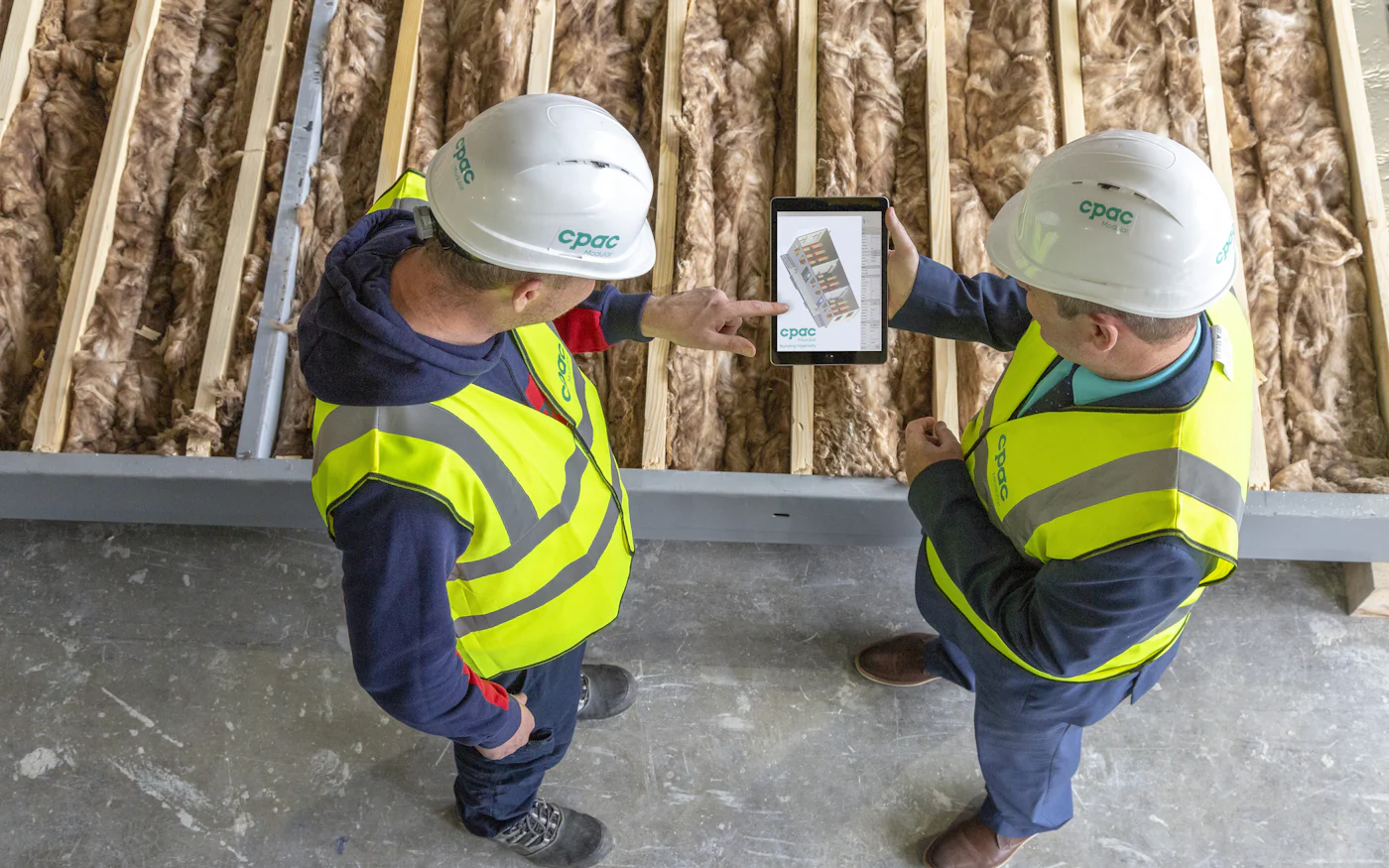
Findings are logged with dated photos at every drop.
FISP Cycle 10 Filing Windows and How Many Scaffold Drops You Need
Your Cycle 10 filing window depends on the last digit of your tax block number, and your drop count depends on how long each street-facing wall is.
Cycle 10 sub-cycles by block number
| Sub-cycle | Block number ends in | Filing window |
|---|---|---|
| 10A | 4, 5, 6, 9 | February 21, 2025 to February 21, 2027 |
| 10B | 0, 7, 8 | February 21, 2026 to February 21, 2028 |
| 10C | 1, 2, 3 | February 21, 2027 to February 21, 2029 |
Buildings marked No Report Filed in Cycle 9 can ask for a sub-cycle override in DOB NOW Safety and file early in Cycle 10 to stop penalties from growing. Local Law 49 of 2025 lets the DOB move to a longer cycle of six to twelve years in the future, but the current rule still sets five-year cycles, so Cycle 10 deadlines stand. See the DOB Cycle 10 service notice.
Minimum close-up drops per wall facing a public right-of-way
| Wall length | Minimum drops |
|---|---|
| Under 60 feet | 1 |
| 60 to 120 feet | 2 |
| 120 to 180 feet | 3 |
| 180 to 240 feet | 4 |
| 240 to 300 feet | 5 |
| 300 to 360 feet | 6 |
| Each added 60 feet | 1 more |
A corner building with two 100-foot street walls needs at least four drops, two on each side. Drone photos and high-resolution images can help plan the work, but under the current rule they do not replace a close-up examination.
What to Prepare Before Your FISP Inspection
Buildings that prepare these items before the QEWI arrives usually finish the inspection faster and avoid a second mobilization.
- Last cycle's FISP report and any amended reports
- A list of open SWARMP items and repairs done since the last filing
- Open DOB violations and any active sidewalk shed permits
- Roof access, keys and a contact who can open bulkheads and terraces
- Drawings or past repair records for cavity walls, terra cotta and curtain walls
- Landmark status, since probes on landmarked buildings may need a Landmarks Preservation Commission filing
- Tenant and storefront notices that we draft and you approve
- Owner login to DOB NOW Safety so the report can be signed and paid without delay
Scaffold Drops and Other Access Methods for a FISP Inspection
The right access method keeps your FISP inspection safe, on schedule and as short as possible for tenants. We match the method to the building height, the sidewalk and what sits below each drop.
| Access method | Best for | What to expect |
|---|---|---|
| Suspended scaffold (swing stage) | Most buildings over six stories with a usable roof | Rigged from the roof by licensed riggers under a DOB permit, then moved drop to drop |
| Boom lift | Lower facades, courtyards and setbacks a scaffold cannot reach | Needs firm ground and may need a street or sidewalk permit |
| Rope access | Tight spots, ornate cornices and walls with no tie-back points | Fast to move, used where the QEWI approves it |
| Existing sidewalk shed or pipe scaffold | Buildings already under repair | Lets the inspection share access already in place |
Each drop runs from the parapet down to the street so the inspector can see the full height of the wall. We plan the order of drops so no single entrance or storefront is blocked for long, and we schedule noisy probe work for hours the building allows. Read more about sidewalk shed and scaffolding in NYC.
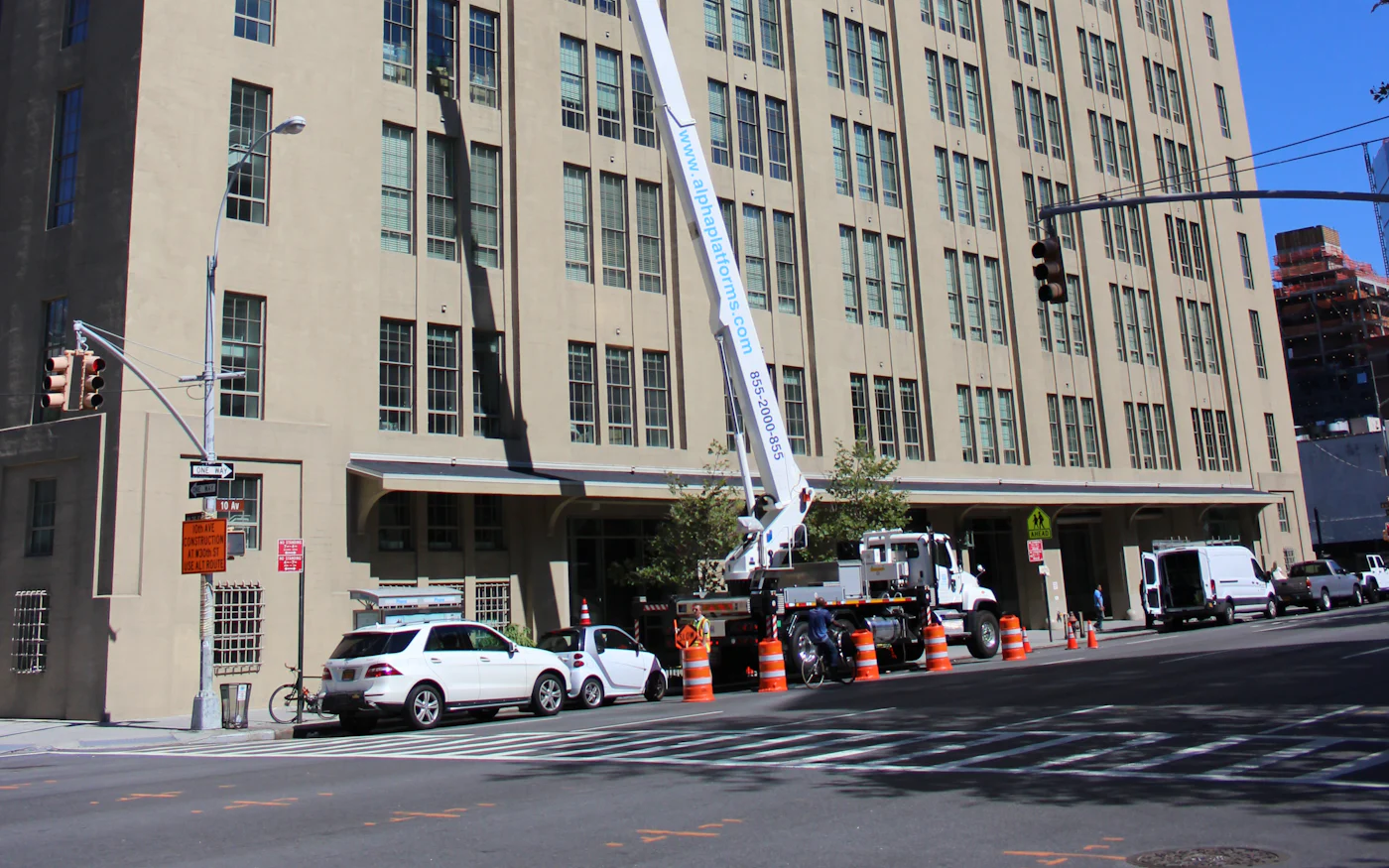
Boom lifts reach lower facades, courtyards and setbacks.
Common Facade Conditions Found in NYC FISP Inspections
Most FISP reports in NYC flag the same handful of conditions, and catching them early is the cheapest way to keep a building rated Safe. These are the items QEWIs list most often on the buildings we support.
| Condition | Where it shows up | Repair page |
|---|---|---|
| Cracked, bulging or spalled brick | Corners, piers and areas around windows | Masonry facade repair NYC |
| Rusted steel lintels and shelf angles | Above windows, with stepped cracks at the ends | Masonry facade repair NYC |
| Loose or cracked terra cotta | Cornices, window surrounds and ornament on prewar buildings | Terra cotta repair NYC |
| Leaning or cracked parapets and loose coping | Roof edges on the street side | Parapet wall repair NYC |
| Failed sealant at windows and panel joints | Curtain walls and newer brick veneer | Facade caulking NYC |
| Loose railings, balconies and fire escapes | Rental and co-op buildings | Local Law 11 facade repair NYC |
| Missing or corroded wall ties | Cavity walls found during probes | Masonry facade repair NYC |
When these items are listed as SWARMP, they must be fixed before the next cycle or they get reported as Unsafe with a $2,000 penalty. Our SWARMP repair NYC program clears them on a schedule that fits your budget.
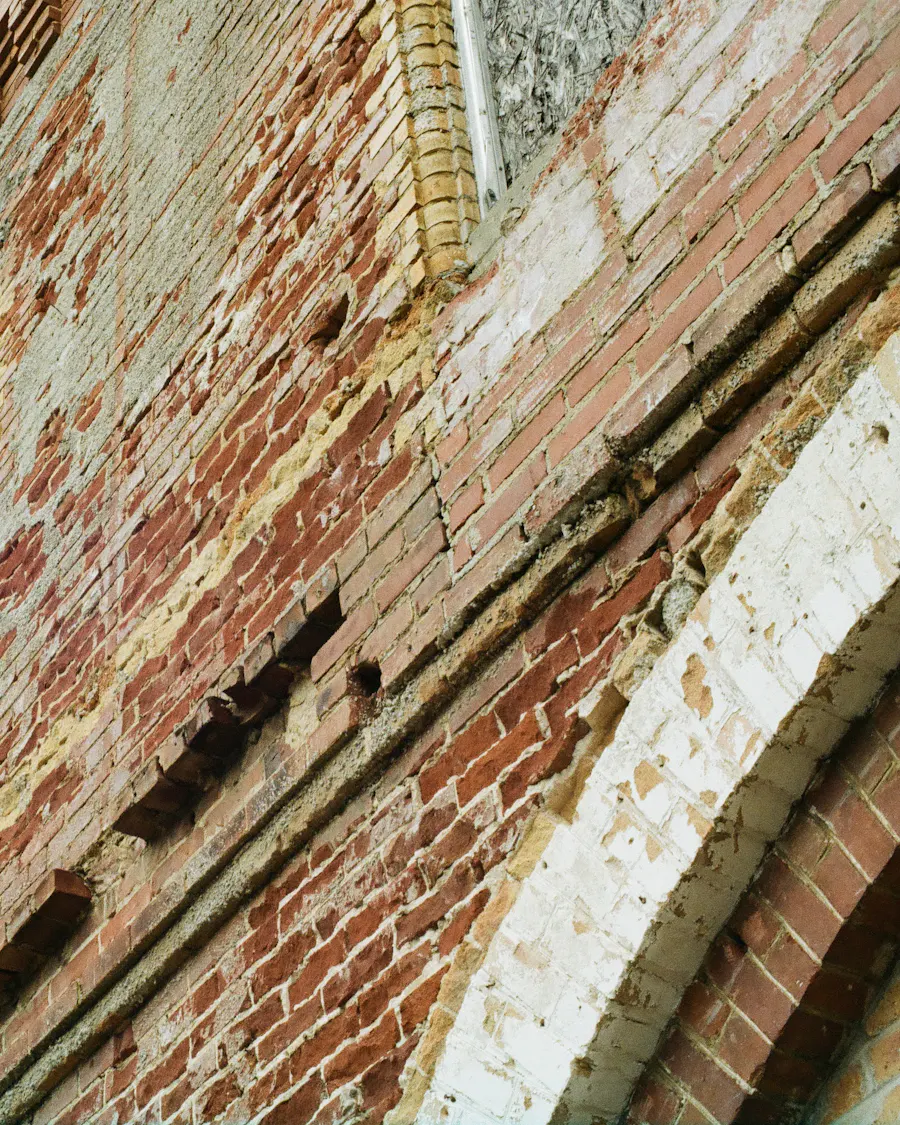
Spalled and cracked brick is one of the most common FISP findings.
How Much a FISP Inspection Costs in NYC
The cost of a FISP inspection in NYC comes down to how much access the building needs, so two buildings of the same height can be priced very differently. We give a written, itemized estimate after reviewing the building and the last report.
What Drives FISP Inspection Cost
- Number of drops, set by the length of each street-facing wall
- Building height and roof conditions for rigging
- Cavity wall probes and the masonry work to close them
- Sidewalk protection needed during access work
- Landmark filings and after-hours work in busy locations
- Repairs the report calls for, which usually cost more than the inspection itself
DOB filing fees in DOB NOW Safety
| Filing | DOB fee |
|---|---|
| Initial FISP report | $425 |
| Amended or subsequent report | $425 |
| Extension request for Unsafe repairs | $305 |
| Civil penalty waiver request | $140 |
Fees and penalty rules follow the DOB facade rule as amended in early 2026. See the DOB facade inspection page and 1 RCNY 103-04 for the full rule.
New Sidewalk Shed Penalties That Raise the Cost of Waiting
Since January 12, 2026, Local Laws 48 and 51 of 2025 put a clock on Unsafe facades. Sidewalk shed permits now run 90 days at a time, and owners face penalties of $5,000 to $20,000 if repair plans are not filed within five months of the first shed permit, or if the repair work is not finished within two years. These sit on top of the existing FISP penalties for late reports and uncorrected Unsafe conditions, so a fast inspection and a clear repair plan protect your budget.
FISP Inspection Support Across NYC Boroughs
Access planning for a FISP inspection changes from one NYC borough to the next, so we plan every job around the street, the building type and the neighborhood rules.

Manhattan
Narrow sidewalks, heavy foot traffic and landmark districts like the Upper East Side, SoHo and Greenwich Village shape every drop plan. We stage rigging early in the day and coordinate probe locations that need Landmarks approval.

Brooklyn
Postwar cavity wall apartment buildings in Flatbush and Bay Ridge need probes in odd-numbered cycles and whenever the QEWI suspects tie failure, while towers in Downtown Brooklyn, Williamsburg and DUMBO need wind-aware scheduling for swing stages.
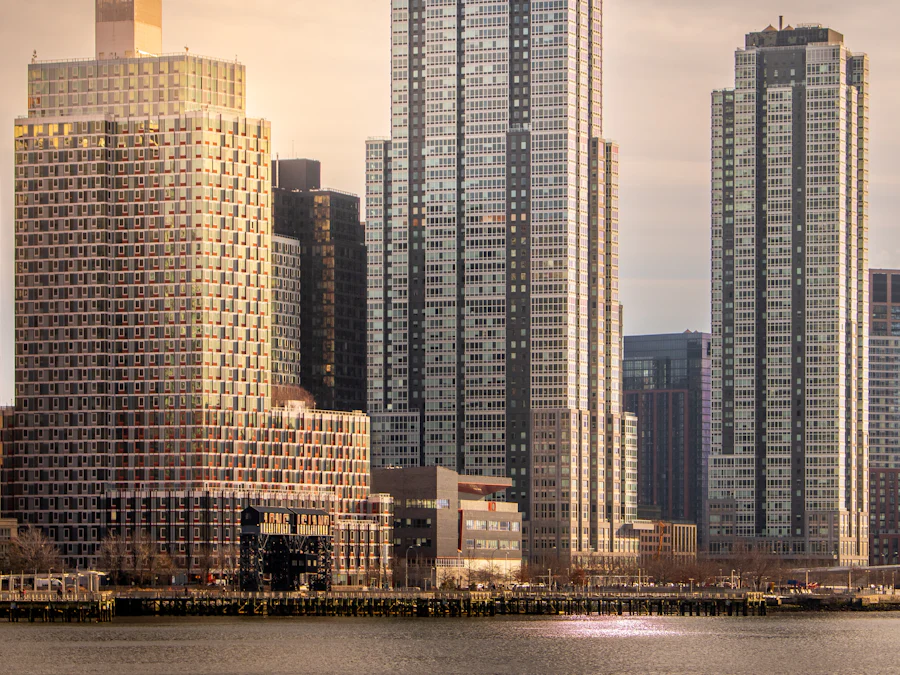
Queens
Glass towers in Long Island City call for curtain wall sealant checks, and co-ops in Forest Hills, Rego Park and along Queens Boulevard need clear notices for residents and ground-floor stores.
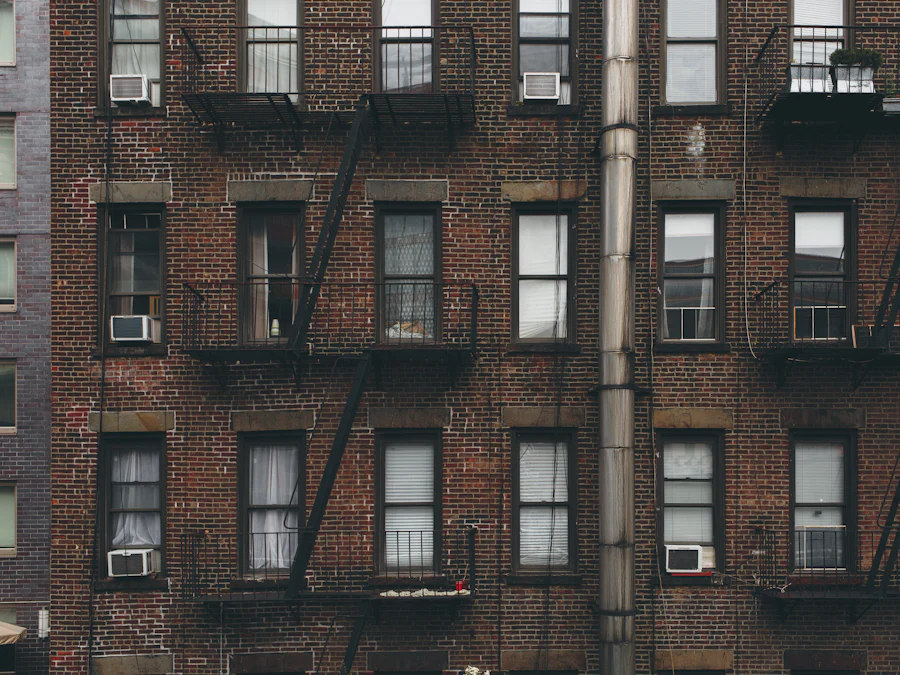
Bronx
Art Deco apartment houses on the Grand Concourse and large rental buildings in Riverdale and Parkchester carry fire escapes, balconies and window units that the QEWI must check one by one.
Wherever your building sits, the focus stays the same, which is a complete FISP inspection in NYC, filed on time, with no surprise trips back to the roof.
More Local Law 11 Services in NYC
FISP inspection support connects to every repair and protection service your building may need after the report is filed.
Balcony Repair NYC
Balcony slabs, railings and terrace guards
Cornice Repair NYC
Sheet metal, stone and terra cotta cornices
Local Law 11 Facade Repair NYC
Repairs built straight from your FISP report
Unsafe Facade Repair NYC
Same-day protection and make-safe work
SWARMP Repairs NYC
Phased repairs before items turn Unsafe
Masonry Facade Repair NYC
Brick, stone, wall ties and rebuilds
Terra Cotta Repair NYC
Pinning, patching and matched replacement
Parapet Wall Repair NYC
Annual parapet observations and repairs
Facade Caulking and Sealant NYC
Sealant replacement at windows and joints
Sidewalk Shed and Scaffolding NYC
Sheds, pipe scaffolds and swing stages
Steel Lintel Replacement NYC
Rusted lintels over windows and doors
Brick Pointing NYC
Repointing and tuckpointing brick joints
FISP Inspection NYC FAQs
Straight answers on drops, probes, filing timelines and what owners handle in DOB NOW Safety.
What does FISP stand for, and is it the same as Local Law 11?
FISP stands for the Facade Inspection and Safety Program. It is the current name for the rules that began as Local Law 10 of 1980 and Local Law 11 of 1998, so a FISP inspection and a Local Law 11 inspection are the same thing.
How many scaffold drops does my building need for a FISP inspection?
You need at least one drop for every 60 feet of wall facing a street, sidewalk or other public right-of-way. A 100-foot street wall needs two drops, and a corner building with two 100-foot walls needs at least four.
Can drones replace scaffold drops in a FISP inspection?
No. Under the current DOB rule, drones and high-resolution photos can support the inspection, but they do not replace the close-up examination from a scaffold or other platform.
Does my building need a cavity wall probe in Cycle 10?
Probes are required on cavity wall buildings in odd-numbered cycles, starting with Cycle 9, so Cycle 10 does not require them by default. Your QEWI can still call for probes if there are signs of tie failure, and late filings may need them too.
How long does one scaffold drop take?
Most drops take one to two days, including rigging, the close-up review and moving the scaffold. Weather, probes and roof conditions can add time, which is why we plan the full drop sequence before the first day.
How soon after the inspection must the FISP report be filed?
The report must be filed within 60 days of the final inspection and no more than one year after the close-up examination. If the 60-day window is missed, the DOB requires a new critical examination.
What does the owner have to do in DOB NOW Safety?
The owner must be registered in DOB NOW Safety, review the QEWI’s report, sign the owner page and pay the filing fee. The QEWI cannot submit the report until those steps are done.
Can Local Law 11 NYC perform the FISP inspection itself?
No. Only a DOB-approved QEWI can perform the critical examination and sign the report. Local Law 11 NYC is a licensed and insured contractor that provides the access, probes, public protection and repairs around that inspection.
What if my building never filed its Cycle 9 report?
Buildings marked No Report Filed can request a sub-cycle override in DOB NOW Safety and file a Cycle 10 report early. Once the report is accepted, penalties stop growing, though past penalties still have to be paid.
Is the FISP cycle changing to six years?
Local Law 49 of 2025 allows the DOB to set a longer cycle of six to twelve years through a new rule. Until that rule changes, the current five-year cycle and the Cycle 10 deadlines still apply.
Does a FISP report count as the annual parapet observation?
It can for that year. If the FISP report includes everything 1 RCNY 103-15 requires for parapets, the DOB does not need a separate parapet report, but the owner must keep a copy on file.
Can a FISP inspection be done in winter?
Yes, but wind, ice and short days limit how long swing stages can safely work. Booking early in your filing window leaves room for weather delays without risking the deadline.
Book Your FISP Inspection Support in NYC Before the Filing Rush
Inspector and rigging calendars fill up fast in the last months of every sub-cycle. Share your building address and block number, and Local Law 11 NYC will map out the drops, the schedule and the repair plan so your FISP report files on time.