- Licensed and insured facade contractor
- Manhattan, Brooklyn, Queens and the Bronx
- Same-day response on unsafe facades
- Call (917) 355-8556

Home/Facade Services NYC/Parapet Wall Repair NYC
Parapet Wall Repair NYC for Every Building Height
Your parapet takes more wind, rain and ice than any other part of the building, and it sits right above the sidewalk. We handle the annual parapet observation, prepare a report that follows 1 RCNY 103-15 and repair what we find, from loose coping stones to full rebuilds. We work on apartment buildings, co-ops, condos, brownstones, office buildings, retail and mixed-use properties across New York City.
- Annual parapet observations for buildings of any height
- Same-day response when a parapet looks unsafe
- Licensed and insured masonry and facade crews
- Manhattan, Brooklyn, Queens and the Bronx
Parapet Wall Repair NYC Quick Answer
In New York City, owners of buildings with a parapet facing a street, sidewalk or other public right-of-way must have that parapet observed once a year under 1 RCNY 103-15, no matter how tall the building is. A competent person looks at the whole parapet up close and records its condition with dated photos, and the owner keeps the report for at least six years. If the parapet is unsafe, DOB must be told right away, public protection goes up and the repair must be finished within 90 days.
- The rule has been in force since January 1, 2024
- It applies at any height, with exceptions for detached one and two family homes and buildings where a fence or barrier keeps people away from the wall
- The report stays with the owner and is shown to DOB on request
- Unsafe conditions are reported through 311 and parapets@buildings.nyc.gov
- A lean of more than one eighth of the wall’s thickness means the parapet is out of plumb
- Licensed and insured contractor
- Reports that follow 1 RCNY 103-15
- Dated photos and location plans
- Residential and commercial buildings
Annual Parapet Observation NYC Under 1 RCNY 103-15
For years, parapets on low and mid-rise buildings were never looked at on a schedule, because FISP only covers buildings taller than six stories. That changed on January 1, 2024. Every building with a parapet fronting a public right-of-way now needs a close-up parapet observation once a year, whether it is a three story walk-up in Bushwick or a forty story office tower in Midtown. Read the 1 RCNY 103-15 rule text and the NYC DOB parapets page for the full requirements.
Which NYC buildings need a parapet observation
| Building type | Annual observation needed |
|---|---|
| Walk-up apartment building with a street-facing parapet | Yes |
| Attached one or two family rowhouse with a front parapet | Yes, the exception only covers detached homes |
| Detached one or two family house | No |
| Mid-rise co-op or condo | Yes |
| High-rise building covered by FISP | Yes, and a FISP inspection NYC report can count for that year if it includes the 103-15 details |
| Retail, office or mixed-use building with a parapet over the sidewalk | Yes |
| Building where a fence or barrier keeps people away from the wall below | No |
| Parapet facing only a private rear yard | Not under this rule, though FISP may still cover it on taller buildings |
Who Can Perform the Parapet Observation
The rule asks for a person who is competent to spot parapet hazards. That can be a bricklayer, mason, building superintendent, handyman or other construction trade worker, an architect, an engineer, a New York State authorized building inspector or an insurance company inspector. Our masons and facade team perform these observations every week and know what a failing parapet looks like before it becomes a sidewalk hazard.
What the Observer Checks
- The entire parapet up close, from the roof, a fire escape or a rig
- Whether the wall is plumb, meaning it leans no more than one eighth of its thickness at any point
- Displacement, cracks, missing or loose bricks or coping stones, deteriorated mortar, spalling and rot
- Whether railings, roof access rails, gooseneck ladders, fire escape handrail attachments, signs and telecom equipment are installed and stable
To put the plumb test in real numbers, a 12 inch thick brick parapet that leans more than 1.5 inches has failed the check.
What Goes in the Parapet Observation Report
- Building address and any other addresses tied to the lot
- Owner name, mailing address and phone number, or a principal’s name and title when the owner is a company or board
- Observer name, contact details, affiliation and business name
- Date or dates of the observation
- A location plan showing which parapets were observed
- Parapet construction, including material, height and thickness
- General condition, any unsafe conditions and the action taken
- Repairs made since the previous report
- Dated photos of what the observer saw
The report is not filed with DOB. The owner keeps it for at least six years and hands it over if DOB asks. We give you a clean PDF with the photos and a location plan so next year’s observation can be compared line by line.
When a Parapet Is Found Unsafe
01
Notify DOB right away
The observer calls 311 and emails parapets@buildings.nyc.gov.
02
Protect the public
The owner installs a sidewalk shed, fence or netting, or removes the loose material and closes off the area.
03
Repair within 90 days
The unsafe condition is corrected within 90 days of the DOB notification.
04
Keep protection in place
Protection stays up until the repair is done.
When we find an unsafe parapet we can make it safe the same day and move straight into the repair. Read more on our unsafe facade repair NYC page.
Parapet Wall Warning Signs and Why NYC Parapets Fail
A parapet is exposed on the front, the back and the top. It gets no heat from the building, so it stays wet longer and freezes harder than the wall below. Most parapet problems start with water getting into the core of the wall and then freezing, rusting steel or washing out mortar.
Common Causes of Parapet Damage
- Open or cracked coping joints that let rain run straight into the wall
- Failed roof flashing and counterflashing at the base of the parapet
- Freeze and thaw cycles that push brick faces off and crack mortar
- Rusting steel inside or on the wall, such as railing posts, ladder anchors, sign brackets and old ties, which expands and jacks the brick apart
- Long runs of brick with no room to move, which crack at corners and where the wall changes direction
- Roofing carried up the inside face that traps moisture behind it
- Old repairs made with hard cement mortar on soft historic brick, which makes the brick crack instead of the joint
Parapet warning signs you can spot from the roof or sidewalk
| Sign | What it usually means | How urgent |
|---|---|---|
| Bricks or coping stones that move by hand | The mortar bond is gone | Unsafe, protect and repair now |
| A visible lean toward the street | The wall is rotating, often from a wet core or rusted steel | Unsafe once it passes one eighth of the wall’s thickness |
| A bulge just below the coping | The core of the wall is saturated | Unsafe |
| Loose railing or ladder anchors | Rusted anchors or cracked masonry around them | Unsafe if they can pull out |
| Stair-step or horizontal cracks | Movement or rusting steel | Repair soon, often treated as SWARMP repairs NYC |
| Spalled brick faces | Freeze and thaw damage | Repair soon and keep watching |
| Open coping joints | Water is entering the wall | Repair this season |
| White staining on the inside face | Water is passing through the wall | Repair this season |
| Roofing torn away at the base | Flashing failure | Repair this season |
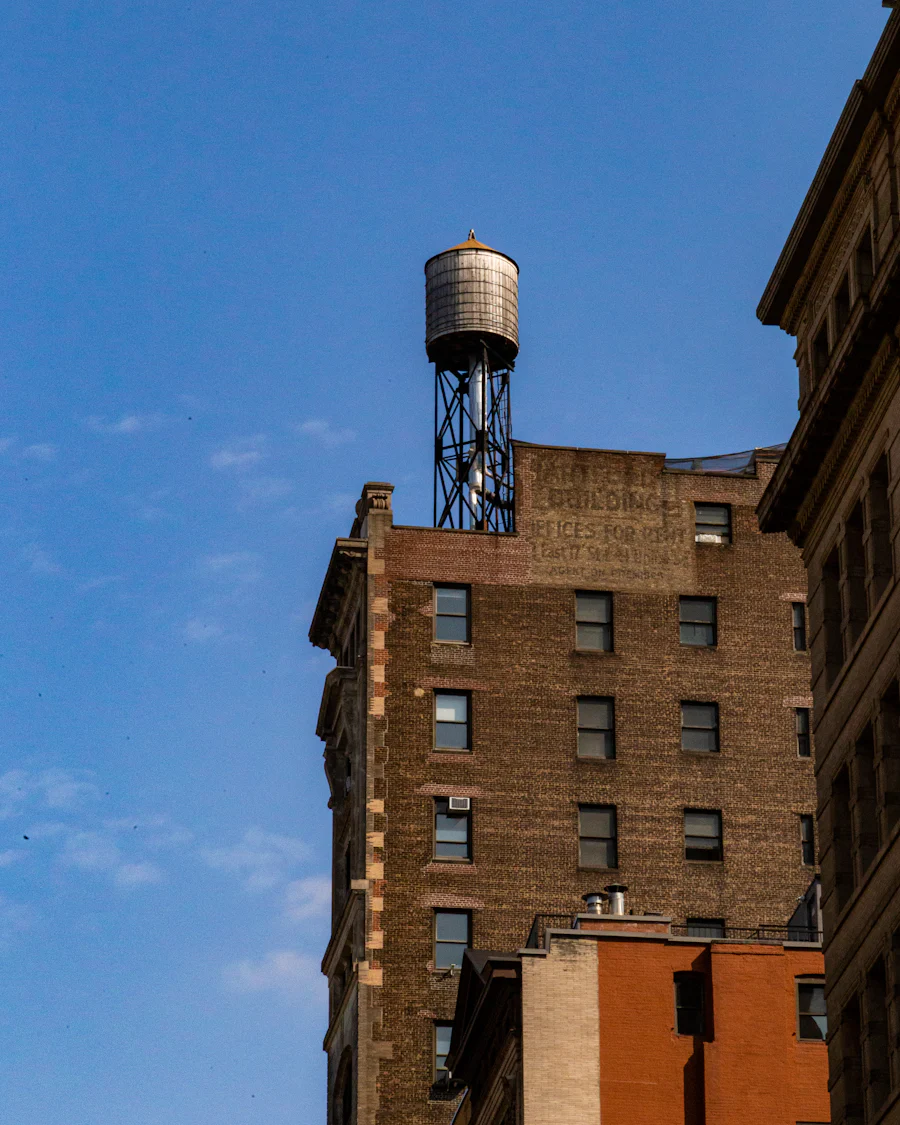
Parapets get no heat from the building, so they stay wet longer and freeze harder.
Parapet Repair Options for NYC Buildings
The right repair is the lightest one that fixes the cause, not just the symptom. Repointing a parapet that has rusted steel inside it only buys a year or two. Rebuilding a parapet that only needs new joints wastes your money. We open up a test area when the condition is unclear, then price the repair that will actually hold. Larger facade programs tied to a FISP cycle are covered on our Local Law 11 facade repair NYC page.
| Repair | When it fits | What the work includes |
|---|---|---|
| Repointing | Brick is sound but joints are eroded or cracked | Cut out old mortar to the right depth and repoint with a mortar matched to the brick, see masonry facade repair NYC |
| Brick replacement | A few spalled or cracked bricks | Remove damaged units and set matching brick in place |
| Coping reset or replacement | Coping stones are loose, cracked or have open joints | Lift coping, add new anchors and flashing, reset with sealed or mortared joints |
| Through-wall flashing | Water is getting in from the top of the wall | Remove coping, install flashing with drip edges, reset coping |
| Partial rebuild | One section is cracked, leaning or loose while the rest is sound | Take down the bad section, rebuild with new ties and flashing, tie into the sound wall |
| Full parapet rebuild | The wall is out of plumb along a run, steel inside it has rusted or the core is saturated | Take down to sound masonry, rebuild with new brick or salvaged brick, flashing and anchors |
| Bracing and anchors | The wall needs stabilizing now or long term | Steel bracing from the roof side or stainless anchors into the structure |
| Make safe | An unsafe condition is found and the full repair waits on permits | Remove loose material, add netting or a sidewalk shed, document the condition |
Older NYC brick is often softer than modern brick, so we match mortar strength to the masonry. Hard cement mortar on soft brick is one of the most common reasons parapets fail again a few years after a cheap repair. Many parapets have a cornice in front of them, and both are best repaired together. See our cornice repair NYC page for that work.

Prewar parapets often need new flashing and coping, not just new joints.
Parapet Coping, Flashing and Roof Detail Repairs
Most parapet failures start at the top or the base. The coping and the flashing are what keep water out of the wall, so they get the most attention in our repairs.
Parapet Coping Repair
NYC parapets carry stone, terra cotta, precast concrete or metal coping. Good coping slopes toward the roof, overhangs both faces with a drip so water falls clear of the wall, and sits on flashing with joints that are sealed or pointed. When terra cotta coping is cracked or glazed units are missing, we repair or replace them the same way we handle other units on our terra cotta repair NYC page. Loose stone coping gets new stainless pins or clips so it cannot slide off the wall again.
Through-Wall Flashing and Counterflashing
Through-wall flashing under the coping stops water from soaking down into the core. At the base, counterflashing laps over the roof membrane so water running down the inside face lands on the roof instead of inside the wall. Where the joints between coping, metal and masonry need sealant, the work follows the same steps as our facade caulking NYC service.
Roof Railings, Ladders and Equipment on the Parapet
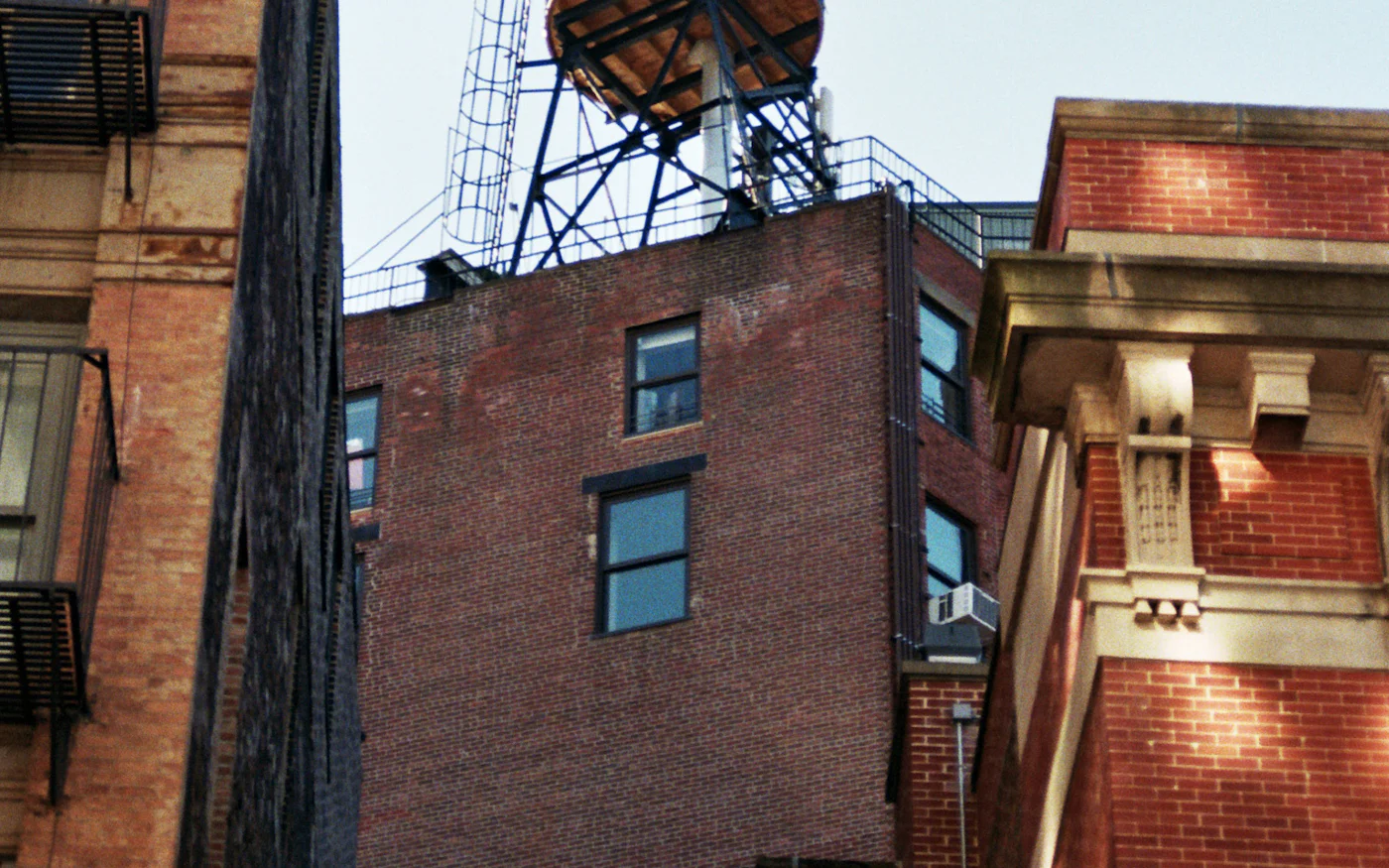
The annual observation covers anything attached to the parapet. Railing posts, roof access rails, gooseneck ladders, fire escape handrail attachments, signs and telecom mounts all count. When steel anchors rust, they swell and split the brick around them. We cut out the damaged masonry, replace the anchors with galvanized or stainless hardware and rebuild around them so the railing is solid again.
Working With Your Roofer
Parapet work and roof work meet at the base flashing. We coordinate the tie-in with your roofer, or handle the flashing ourselves when the roof is in good shape, so the membrane is not left open between trades.
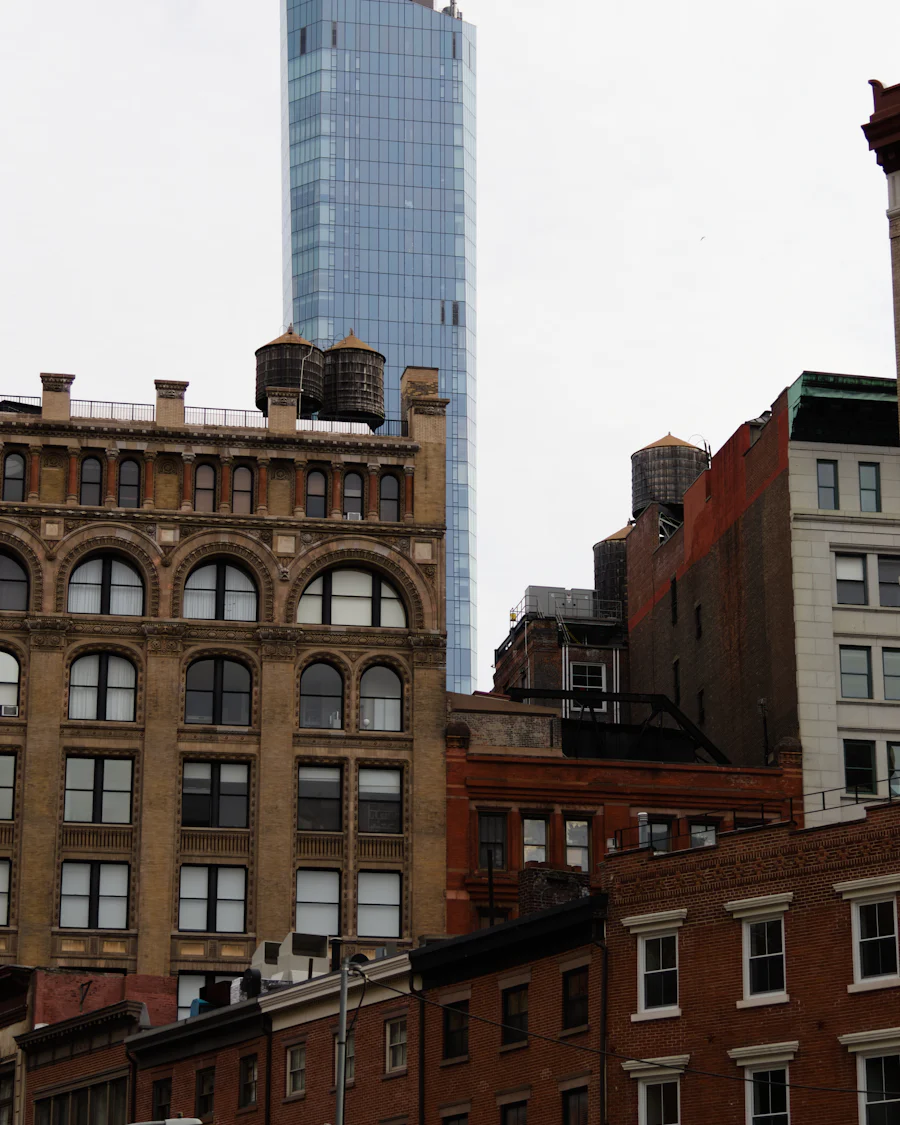
Good coping overhangs both faces with a drip so water falls clear of the wall.
Our Parapet Repair Process in NYC
From the first call to the closeout photos, every parapet job follows the same seven steps so your report and your repairs stay in line.
01
Call or send a request
Tell us the address, the building height and what you have seen. If a parapet looks unsafe, we respond the same day.
02
Close-up parapet observation
We look at the whole parapet from the roof, a fire escape or a rig and record dated photos of every condition.
03
Report and findings
You get a report that follows the 1 RCNY 103-15 format, with a location plan, construction details, conditions and recommended actions.
04
Repair scope and clear price
We explain which repairs are urgent and which can be planned, then give you a clear price for each.
05
Protection and permits
If the work needs a sidewalk shed, netting or a pipe scaffold, we set it up through our sidewalk shed and scaffolding NYC service and handle any DOB filings the job needs.
06
Parapet repair work
Our crews repoint, reset coping, install flashing or rebuild the wall to the agreed scope.
07
Closeout photos and report update
We record the finished work so next year’s report can list the repairs made since the previous observation.
What We Need From You
- Roof access, and fire escape access where needed
- Your last parapet report or FISP report if you have one
- Any DOB violations or notices on the building
- A contact who can let the crew in on work days
Parapet observations and repairs are scheduled around residents, storefronts and roof equipment, and we leave the roof clean and the flashing closed at the end of every work day.
Parapet Repairs Across Manhattan, Brooklyn, Queens and the Bronx
Every borough has its own parapet problems, because the building stock is different. Here is what we see most often.
Parapet Wall Repair in Manhattan
Tenement walk-ups on the Lower East Side and in Harlem often have thin brick parapets with rusted railing posts. Pre-war co-ops on the Upper West Side and Upper East Side carry stone and terra cotta coping that needs new anchors and flashing. Office and retail buildings in Midtown and downtown add sign brackets and rooftop equipment to the mix.
Parapet Wall Repair in Brooklyn
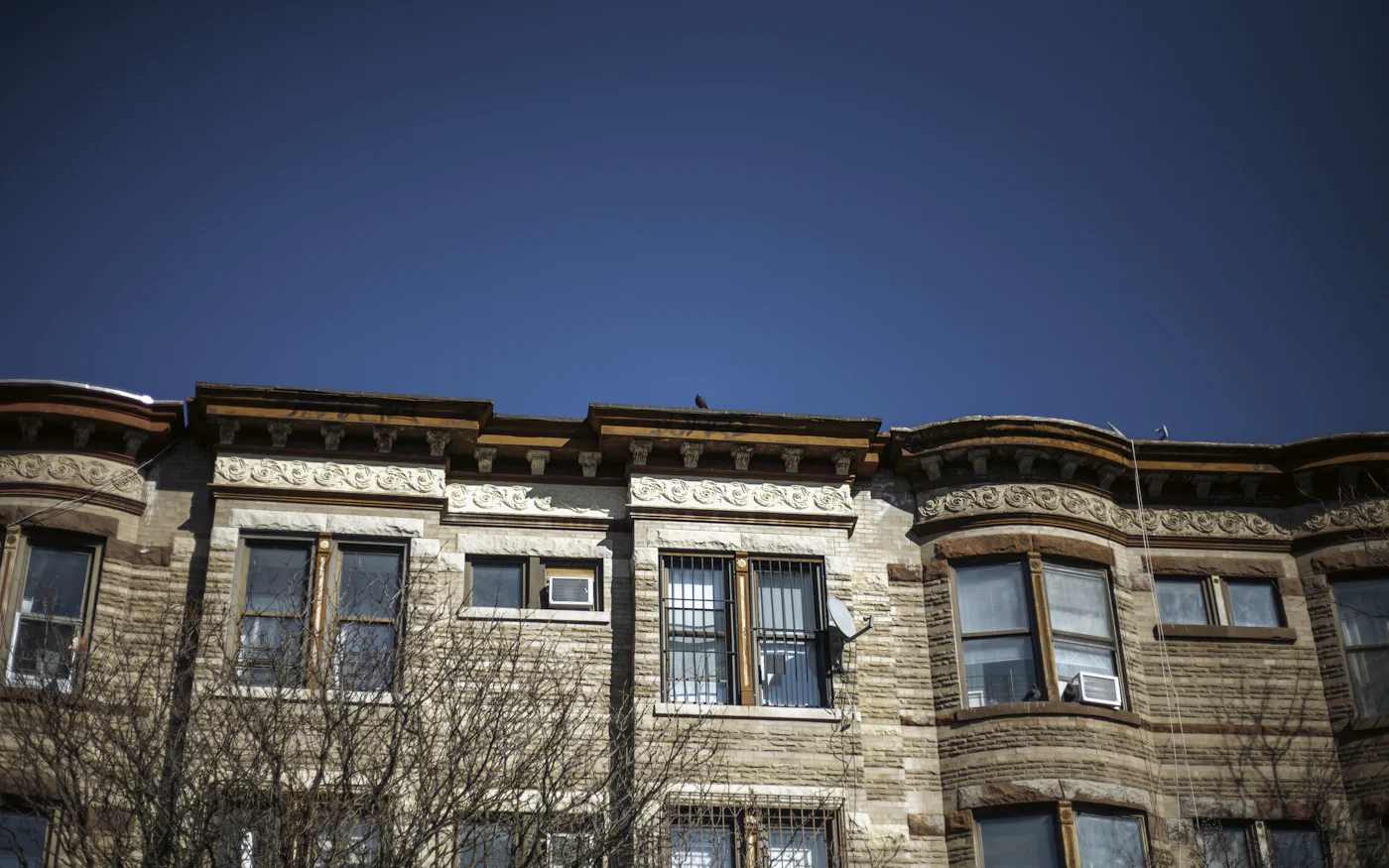
Brownstones and brick row buildings in Park Slope, Bed-Stuy, Crown Heights and Bushwick make up a big share of our parapet work. Many are attached one and two family homes, which are not exempt from the annual observation, and many have front parapets that were patched with hard cement mortar decades ago.
Parapet Wall Repair in Queens
Six story brick apartment buildings in Jackson Heights, Forest Hills and Astoria often have long parapet runs with cracked corners. Mixed-use buildings along commercial avenues in Flushing, Jamaica and Long Island City have parapets right above busy sidewalks, so a loose coping stone becomes urgent fast.
Parapet Wall Repair in the Bronx
Large pre-war elevator buildings along the Grand Concourse and five and six story walk-ups in neighborhoods like Fordham, Mott Haven and Kingsbridge often show rusted gooseneck ladders, failed flashing and leaning sections at the corners. We see a lot of make-safe work here before full rebuilds.
More Facade Services for NYC Buildings
Parapet work often connects to masonry, terra cotta, sealant and shed services on the same building.
Cornice Repair NYC
Sheet metal, stone and terra cotta cornices
Brick Pointing NYC
Repointing and tuckpointing brick joints
FISP Inspection NYC
QEWI access, scaffold drops and filing support
Local Law 11 Facade Repair NYC
Repairs built straight from your FISP report
Unsafe Facade Repair NYC
Same-day protection and make-safe work
SWARMP Repairs NYC
Phased repairs before items turn Unsafe
Masonry Facade Repair NYC
Brick, stone, wall ties and rebuilds
Terra Cotta Repair NYC
Pinning, patching and matched replacement
Facade Caulking and Sealant NYC
Sealant replacement at windows and joints
Sidewalk Shed and Scaffolding NYC
Sheds, pipe scaffolds and swing stages
Balcony Repair NYC
Balcony slabs, railings and terrace guards
Steel Lintel Replacement NYC
Rusted lintels over windows and doors
Parapet Wall Repair NYC FAQs
Answers on the annual parapet rule, who can observe, unsafe conditions and repair choices.
Does a three story building in NYC need an annual parapet observation?
Yes. The rule applies to buildings of any height with a parapet fronting a public right-of-way. The only exceptions are detached one and two family homes and buildings where a fence or other barrier keeps people away from the exterior wall.
Who can perform the annual parapet observation in NYC?
A person competent to spot parapet hazards, such as a mason, bricklayer, superintendent, handyman or other construction trade worker, an architect, an engineer, a state authorized building inspector or an insurance inspector. Our team performs observations and repairs, so the person who finds the problem can also fix it.
Do I have to file the parapet observation report with DOB?
No. The owner keeps the report on file for at least six years and gives it to DOB if DOB asks for it. Keeping it organized with dated photos makes next year’s observation faster and helps show repairs made since the last report.
Does the parapet report need to be signed by an engineer?
No. The rule accepts any person competent to identify parapet hazards, including masons, superintendents and other construction trade workers as well as architects and engineers. The report can be prepared by the observer, or by the owner working with the observer.
What happens if the observer finds an unsafe parapet?
The observer calls 311 and emails parapets@buildings.nyc.gov right away. The owner puts up public protection or removes the hazard, and the unsafe condition must be corrected within 90 days of the notification.
How far can a parapet lean before it counts as unsafe?
The rule treats a parapet as plumb when it leans no more than one eighth of its thickness at any point. On a 12 inch thick wall that is 1.5 inches. More than that, and the parapet needs repair.
Do balcony walls count as parapets under the annual rule?
No. Balcony parapets and railings are not part of the annual parapet observation. On buildings taller than six stories, balconies are still looked at during FISP.
Does a parapet on the back of the building need an observation?
Only parapets that front a public right-of-way, such as a street or sidewalk, fall under the annual rule. A parapet that faces only a private rear yard is not covered by it, although FISP still covers rear walls on taller buildings and a failing parapet is a hazard either way.
Should a damaged parapet be repointed or rebuilt?
Repointing works when the brick is sound and the wall is plumb. If the wall leans, has rusted steel inside it or has a saturated core, a partial or full rebuild with new flashing is the repair that lasts. A small test opening usually settles the question.
How long does parapet wall repair take in NYC?
Repointing and coping work on a typical row building front often takes days to a couple of weeks. A full rebuild on a large building can take longer, depending on permits, protection, access and weather. We give you a schedule with the price.
Do parapet repairs need a DOB permit?
It depends on the scope. Rebuilding a parapet, or work that needs a sidewalk shed or scaffold, usually involves DOB filings. Small repointing and minor repairs often do not. We confirm what your job needs before work starts and handle the filings.
Are railings and ladders on the parapet part of the observation?
Yes. The observer checks that railings, roof access rails, gooseneck ladders, fire escape handrail attachments, signs and telecom equipment on the parapet are installed and stable. Rusted anchors are one of the most common findings we repair.
Book Your Parapet Wall Repair in NYC
Whether you need this year’s annual parapet observation, a coping repair before winter or a same-day response to a loose brick, our licensed and insured team is ready. We work on apartment buildings, co-ops, condos, brownstones and commercial properties in Manhattan, Brooklyn, Queens and the Bronx.